

By Samantha Baker
Detroit is more than motor engines and manufacturing—it’s a city actively weaving technology into everyday life. From community-built internet to government-surveillance worries, here’s how Detroiters are experiencing tech in their routines.
Community Internet: Building Access from the Ground Up
In parts of Detroit where fast internet feels like an unreachable luxury, neighborhood groups are changing the story. The Equitable Internet Initiative (EII) helps residents in areas like the North End, Southwest, and Islandview to build wireless networks governed by the community itself. What started with underserved homes and small pilot networks has grown to serve more than 500 households—and counting—offering internet access where traditional ISPs aren’t serving well. Digital Stewards, locals trained in tech leadership, run workshops and build infrastructure that reaches into homes, elders, and families without reliable connectivity. These networks are about more than online access—they’re infrastructure for opportunity.
Digitally Bridging the Gap: Hubs, Tech Bars, and Kits
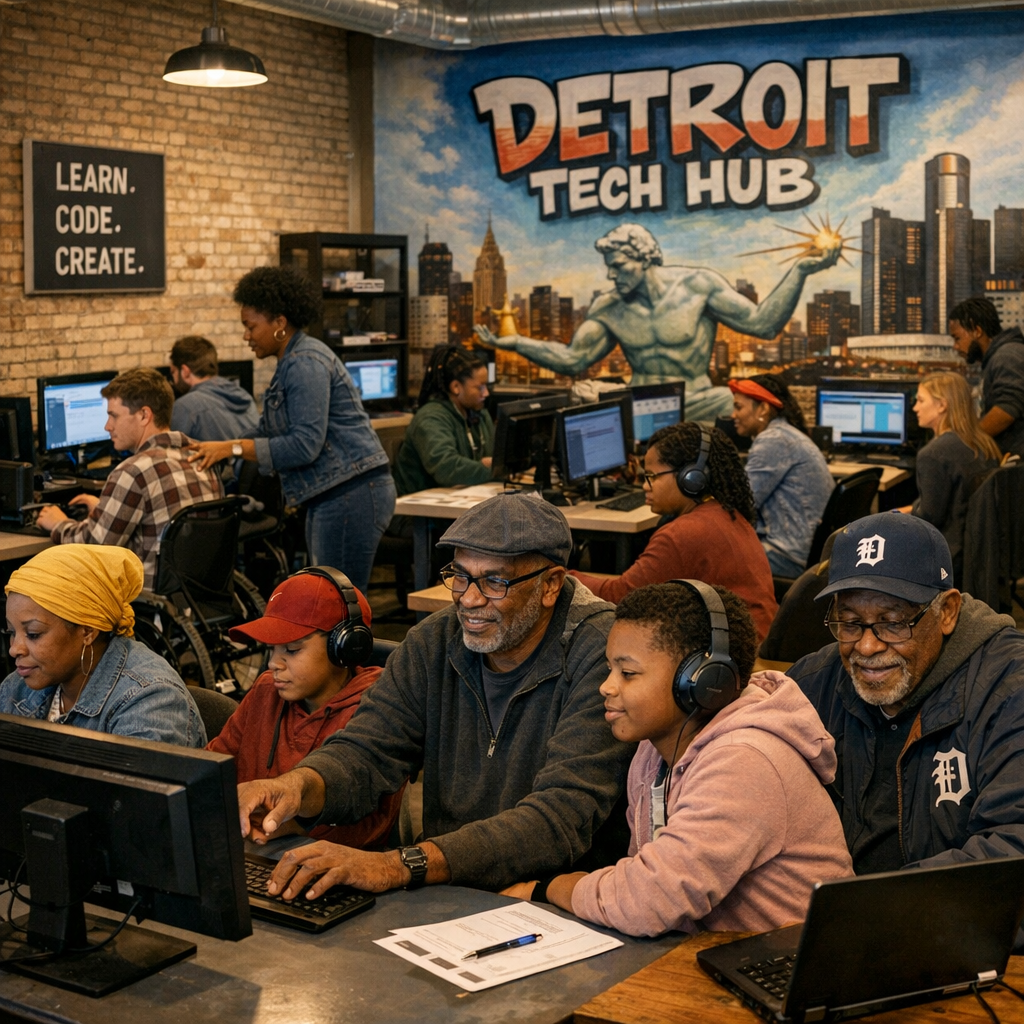
Physical spaces are still vital. Detroit has certified Tech Hubs—library branches, rec centers, rec centers with free Wi-Fi, device access, and literacy programs. Motor City Tech Bars inside Public Library branches offer free tech repairs, personalized help, and classes. They’re located so each council district has one. If your phone screen cracks or your laptop lags, you can bring it in for free diagnostics and fix-ups—including e-waste recycling.
Smart Sensors, Kiosks & AI: The Tech You Don’t Always See
Downtown streets, corridors in Midtown, Corktown, and beyond are getting smart upgrades. Kiosks share transit info, safety alerts, and free Wi-Fi, offering public access and emergency help buttons. In some places, smart intersection tech reduces traffic delays significantly. Meanwhile, an initiative called Last Mile—run by the Detroit Blockchain Center—uses local infrastructure to expand community-owned broadband via projects like KeyLTE.
When AI Meets Public Trust
With these new technologies come tough questions. According to a University of Michigan survey, many Detroiters are cautious about how AI should be used in government. Support varies widely depending on purpose—majority back AI tools for identifying missing children, but far fewer feel comfortable with AI helping navigate government services, manage water systems, or monitor neighborhood upkeep.
Everyday Impacts You Might Already Be Feeling
- School or Work from Home: Community hubs and shared networks give students and workers connection where there might not otherwise be internet at home.
- Transportation & Safety Alerts: Smart kiosks and intersection sensors help keep people informed about delays or hazardous conditions in real time.
- Device Repair and Upgrade: Tech Bars offer free help you’d usually pay for or travel far to get—cuts down cost and frustration.
- Feeling Heard (or Not): As Detroit explores using AI in public services, voices are rising. Does the tech reflect fairness, transparency, and respect for privacy?
What to Watch Next
What will determine whether tech truly improves daily life for Detroiters will be:
- Community control over networks and data, so residents—not just tech companies or government—shape what gets built.
- Clear guidelines and oversight for AI in public services, especially where people feel trust is weakest.
- Equitable placement of services—ensuring every council district has access to Tech Hubs, Tech Bars, internet options.
- Continued investment in digital literacy, so folks know not just how to use but how to push back or shape tech use in their lives.
The tech story in Detroit isn’t just about gadgets or infrastructure—it’s about how deeply technology becomes part of being a Detroit resident. When access is shared, questions are asked, and power is balanced, the promise of tech becomes something more than hype.