

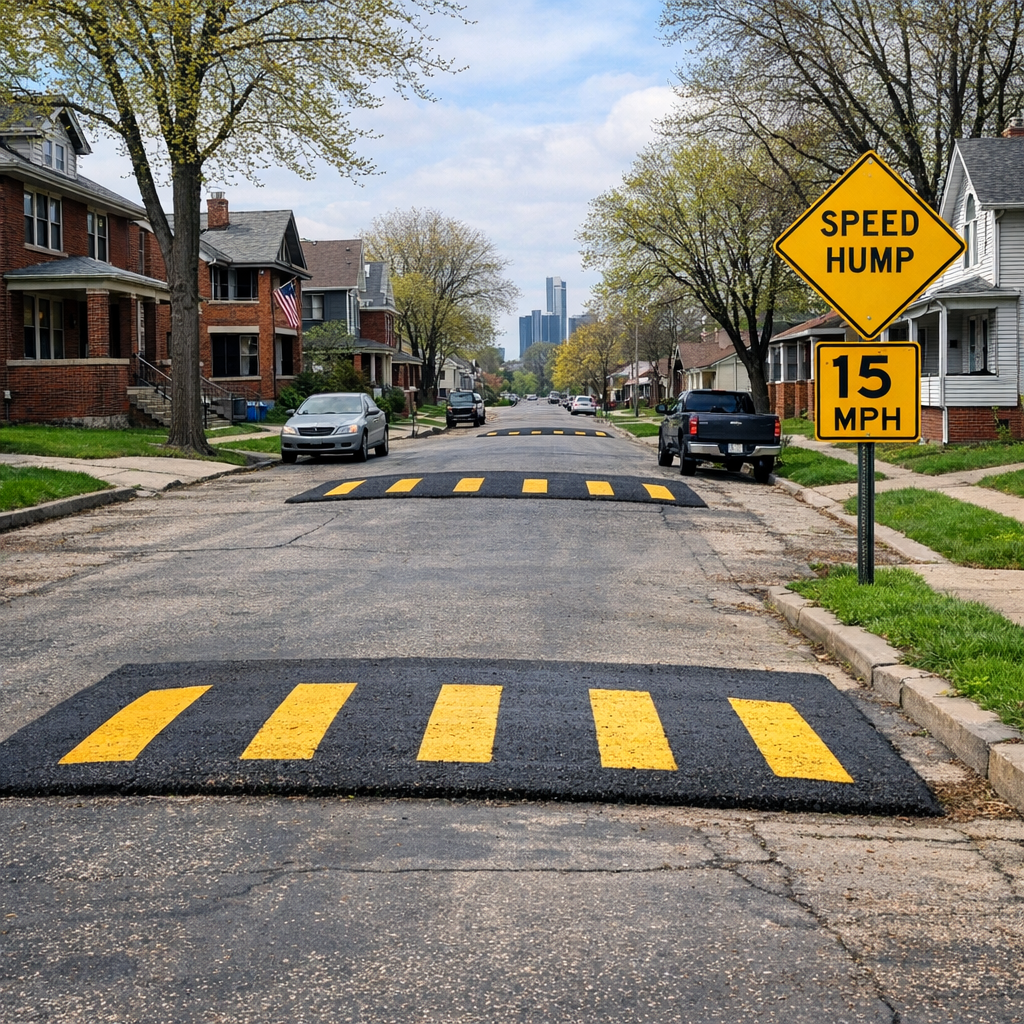
Detroit is actively pursuing several initiatives to enhance public safety and community well-being, focusing on issues like speeding, air quality, and public health.
Speed Hump Installations to Curb Reckless Driving
In an effort to reduce speeding and reckless driving, Detroit plans to install 312 new speed humps on residential streets citywide in 2026. This initiative builds upon the more than 10,000 speed humps added since 2016. The new locations were selected based on factors such as proximity to schools and parks, housing density, and police records of speeding incidents and traffic accidents. A full list of streets slated for the installations has been released publicly, and a map of existing speed humps is available for reference.
Addressing Air Quality Concerns
A recent report from the American Lung Association reveals that Detroit ranks among the worst U.S. metropolitan areas for air quality, specifically for short-term and annual particle pollution. The Detroit-Warren-Ann Arbor region placed 9th nationally among over 200 metros for worst annual particle pollution. This type of pollution, primarily from vehicles, factories, and power plants, can exacerbate health conditions such as asthma, diabetes, strokes, heart attacks, and lung cancer. Citizens can monitor pollution updates via Airnow.gov.
New Leadership in Public Health
Ali Abazeed, formerly the founding director of Dearborn’s public health department, has been appointed as Detroit’s new chief public health officer under Mayor Mary Sheffield’s administration. Abazeed, who led public health initiatives in Dearborn since 2022—including efforts to reduce drug overdoses and improve air quality—will now focus on integrating health strategies across all city departments in Detroit. His appointment is part of a broader initiative by Sheffield, which also includes anti-poverty efforts led by newly appointed chief Luke Shaefer. Abazeed emphasized the need for a holistic approach to public health, pointing out the interconnectedness of health issues and socioeconomic factors.
These initiatives reflect Detroit’s commitment to addressing key community concerns and improving the quality of life for its residents.